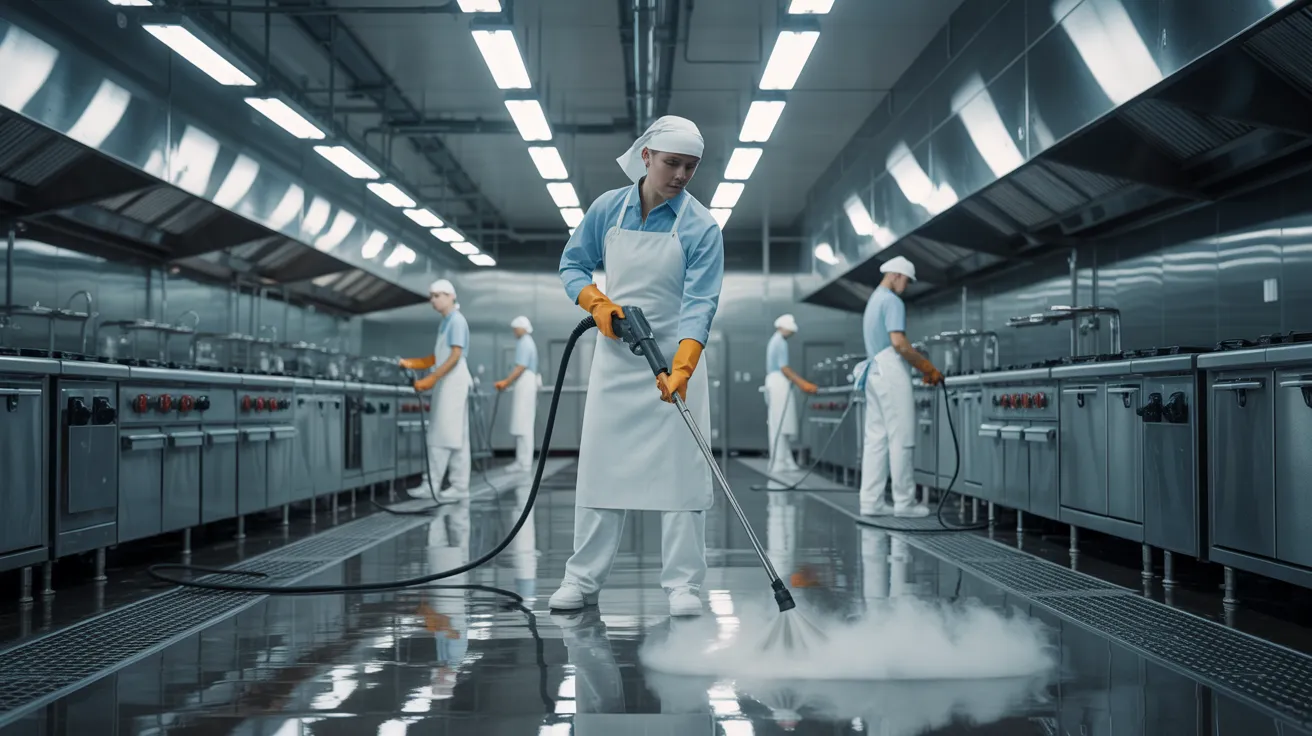
Professional food safety experts located in Brampton ensure restaurants, commissaries, baking enterprises, warehouses, and mobile food units to sanitation standards. They treat high-touch surfaces, food prep surfaces, equipment, floors, drains, restrooms, and food handling areas with certified chemicals, in correct dilution, and using documented contact periods.
Main Points
- Sanitation professionals in Brampton support restaurants, grocery departments, commissaries, warehouses, bakeries, schools, mobile vendors, and allergen-sensitive operations.
- High-touch surfaces, food-contact equipment, kitchens, floors, drains, restrooms, and storage areas are sanitized using compartmentalized approaches to prevent cross-contamination.
- Confirmation of approved sanitizer dilution, compatibility, and contact time is performed by trained contractors, with conclusion recorded using swabs, reviews, and corrective-action records.
- Everyday, weekly, and periodic activities designated by area make up maintenance timelines grounded on danger, production volume, changeovers, accidents, and regulations.
- Emphasize contractors demonstrating hazard analysis knowledge, public-health expertise, safety training training, liability, endorsements, coded tools, and inspection-ready maintenance records.
Which Brampton Venues Need Food Safety Cleaning?
You must adhere to food safety cleaning if your facility is subject to health department oversight, food standards, or HACCP requirements. This covers food venues, break rooms, food centers, supermarket areas, butcheries, seafood displays, shops, and commercial food prep.
Compliant food safety cleaning is equally needed in storage warehouses, production plants, freezer facilities, bakeries, school nutrition services, reception halls, and meal delivery centers. Mobile and temporary operations are included, examples including food trucks, event vendors, and temporary stalls. Your establishment must have documented cleaning protocols when your workers prepare supplies, portion completed foods, reheat products, or manage allergen records. In Brampton, cleanliness continues to be not optional; it represents statutory, functional, and public health standards.
What Do Brampton Cleaning Experts Clean?
Professional cleaning services specializing in Brampton sanitize touched surfaces, kitchen facilities, floors, and restrooms to satisfy food safety standards and health requirements. Emphasis on these spaces stems from extreme cross-contamination risk, potential for accidents, and possible regulatory violations.
When you know their cleaning scope, you can ensure your operation's cleaning procedures satisfy compliance and operational standards.
Cleaning High-Touch Points
determine how often each zone is sanitized
technical specifications and applicable regulations is essential. to sustain proper function. Specialists might utilize swab testing to validate sterilization efficacy
Kitchen Areas, Floor Surfaces, and Bathroom Spaces
Brampton cleaning professionals will handle kitchens, floors, and restrooms since each space presents separate food safety concerns, injury, and public health challenges. In industrial kitchens, you need grease removal from cooking stations, appliance surfaces, drain systems, preparation areas, and backsplashes to reduce bacterial growth and pest activity.
Documented floor care is likewise provided as part of the service.
In restrooms, cleaners treat touchpoints, fixtures, partitions, dispensers, and waste containers then refill supplies and eliminate odor. They also service restaurant moprooms, where chemical storage, sink hygiene, and drainage conditions can affect sanitation compliance and staff safety daily.
The Importance of Food Safety Cleaning in Brampton
Brampton businesses need to implement proper sanitation practices for meeting legal standards and obtaining approval. You also reduce cross-contamination by cleaning and sanitizing food-contact surfaces, equipment, and high-touch areas correctly. Most importantly, you safeguard public health by lowering the risk of foodborne illness in your facility.
Food Safety Regulations
Because Brampton food businesses operate under mandatory safety protocols, food safety cleaning directly influences your capacity to satisfy health code requirements, protect customers, and prevent enforcement action. You must maintain hygienic food handling zones, verifiable cleaning logs, safe chemical management, and auditable operational standards that correspond to municipal and provincial inspection expectations.
When inspectors review your operation, they evaluate whether your cleaning procedures supports safe storage, machinery hygiene, trash control, and washroom maintenance.
Cross-Contamination Prevention
Following regulatory requirements depends on your ability to prevent cross-contamination in daily food handling and cleaning. You must separate raw ingredients from ready-to-eat foods, disinfect work areas after use, and maintain separation of cleaning products from food. Well-defined guidelines decrease contamination chances and support consistent compliance during inspections.
You could implement allergen segregation to prevent priority allergens from contacting common areas, containers, or machinery. Apply separate boards, color-marked equipment, and rigorous tool identification so staff don't mix items during preparation or service. Enforce washing hands following raw meat, seafood, eggs, or allergen-containing products. Swap cleaning rags frequently, and test disinfectant concentration using strips. When you train staff to follow these controls every shift, you develop a more sanitary, secure business that meets Brampton's food safety expectations daily.
Public Health Safeguarding
Should cleaning standards collapse, you don't simply encounter inspection problems—you increase the potential of contamination-related sickness harming customers, staff, and the wider Brampton community. You also undermine your responsibility in safeguarding community wellness, especially in busy food facilities where contamination can spread quickly through surfaces, equipment, and touchpoints.
You need cleaning protocols that remove soils, disinfect properly, and verify results. That requires adhering to exposure periods, employing authorized sanitizers, documenting schedules, and training staff to meet health-unit expectations. These measures facilitate disease prevention by reducing pathogens before they reach food or hands. In Brampton, strong sanitation protects vulnerable populations, limits outbreak potential, and helps you demonstrate due diligence. When you maintain proper standards, you don't just meet regulations—you substantially decrease danger and promote secure food handling citywide.
How Does Cleaning Support Food Safety Compliance?
Embracing comprehensive cleaning schedules solidifies food safety compliance by minimizing contamination hazards, controlling pathogen growth, and maintaining your facility's adherence to sanitation requirements under HACCP-based programs and public health regulations. You verify that food-contact surfaces remain visibly clean and microbiologically controlled, facilitating documented preventive controls and inspection readiness.
Systematic cleaning additionally solidifies allergen management by eliminating residues that can cause undeclared allergen exposure. When you combine verified sanitation methods with standards training, your staff can adhere to consistent approaches, apply approved chemicals appropriately, maintain records thoroughly, and respond to discrepancies ahead of problems worsen. Consistent cleaning facilitates supply chain documentation, establishes remedial measures, and exhibits due diligence throughout audits. Moreover, it supports you safeguard product quality, copyright regulatory compliance, and lower the possibility of compliance actions, mass recalls, formal complaints, and unnecessary health dangers.
How Should You Schedule Commercial Cleaning Services?
cleaning routines or between work periods wherever food-contact areas, restrooms, and frequently touched surfaces
Use weekly or every month schedules
Finding Quality Brampton Cleaning Experts: A Guide
Evaluate providers first by food-safe sanitation requirements rather than cost. You must ensure each provider understands CFIA, public health, and HACCP requirements for your business. Request proof of insurance, WHMIS compliance, staff training documentation, and supervision methods. Check technician understanding of cross-contamination risks, chemical safety, and traceable sanitation records.
You should further examine operational reliability and answerability. Request references from food facilities in Brampton, then review reply speed, corrective action plans, and communication standards. Validate the company supports supplier audits and can present inspection-ready documentation to authorities or third parties. Confirm equipment is maintained, color-coded implements are applied correctly, and facility-specific risks are identified. A experienced service ensures regulatory compliance, product quality, and your reputation in the market.
What does a Food Safety Cleaning Plan encompass?
Write out a framework that outlines every sanitation activity, guideline, and role before production begins. You should record cleaning frequencies, approved chemicals, dilution rates, contact times, tools, and verification methods for each area, surface, and device. Remember to add pre-operational inspections, corrective actions, and employee training requirements.
Your framework should also cover cross-contamination prevention, waste disposal, pest management measures, and scheduled documentation for bathrooms, drainage, ground surfaces, and food-handling zones. Clarify how you'll distinguish raw from ready-to-eat operations, support ingredient tracking, and copyright accurate allergen labeling through validated cleaning between product changes. You should establish accountability, maintain signed records, and check results against regulatory standards, HACCP controls, and customer requirements. When gaps appear, adjust procedures immediately and retrain staff.
Frequently Asked Questions about the Plan
Do cleaning services work during overnight shifts at Brampton properties?
If you manage regulated spaces, you'll also require records that support audits and ensure compliance.
Are hazard containment solutions available from Brampton cleaning experts?
Yes, you can discover many Brampton sanitation experts providing hazard containment options. They manage contamination, assess dangers, isolate contamination, and initiate rapid cleanup to reduce risk and avoid operational impact. You should verify response rates, certifications, safety protocols, and disposal methods. If your facility must meet compliance standards, pick a provider that tracks incidents, adheres to standards, and ensures audit compliance.
Can environmentally safe disinfectants be deployed safely on food preparation areas?
Absolutely, plant-based sanitizers remain suitable for food-handling equipment when you opt for solutions certified for food use and complying with regulations. You must confirm contact times, dilution rates, and rinse procedures ahead of deployment. Plant-derived products minimize harsh chemical exposure, though you should gather proof of efficacy against harmful bacteria. For preserving residue-free areas, stick to precise manufacturer instructions and ensure the sanitizer complies with relevant food safety standards.
Can cleaning schedules flex with seasonal shifts?
Without question, maintenance plans adapt well for seasonal shifts. Modify intervals, staff levels, cleaning agents, and verification steps to fit seasonal patterns while maintaining compliance standards. Decrease operational delays by timing disinfection during changeovers, peak volumes, and equipment use patterns. Additionally update procedural documents, training, and facility monitoring to account for periodic risks, new allergens, or higher contamination levels. Consistent reviews ensure your schedule effective.
Do commercial cleaners train staff on hygiene standards?
Absolutely, professional cleaning companies frequently provide staff training on sanitation best practices. Your team receives instruction on correct chemical handling, contact times, cross-contamination prevention, machine takedown, and paperwork. They typically align instruction with HACCP, GMP, and CFIA or regional health authority requirements. Many also perform sanitation audits to ensure adherence, pinpoint weaknesses, and reinforce corrective actions. This helps you maintain uniform standards, pass inspections, and lower contamination dangers consistently.
Closing Remarks
When you partner with Brampton commercial cleaning and food safety specialists, you aren't merely cleaning—you maintain your facility consult article audit-prepared and your standards compliant. From kitchens to processing floors, every clean surface and well-kept corner minimizes unwelcome guests and avoid expensive problems. By scheduling service at the right intervals and adhering to a detailed cleaning schedule, you protect staff, customers, and your brand image. In a tightly regulated environment, clean spaces are essential—they're fundamental to proper operations.